Lead voice opens the phrase, then the second performer answers with a lower line or a tight harmony turn.
Duet With Yourself
A good self-duet feels like two real roles, not one vocal duplicated for the camera.
This search intent usually comes from singers who want the chemistry of a duet without another person in the room. Harmonade fits when the job is to split one voice into lead, answer, harmony, and timing choices that still feel human on replay.
Lead and answer parts
Self-collab covers
Two-role framing
Harmony reveal
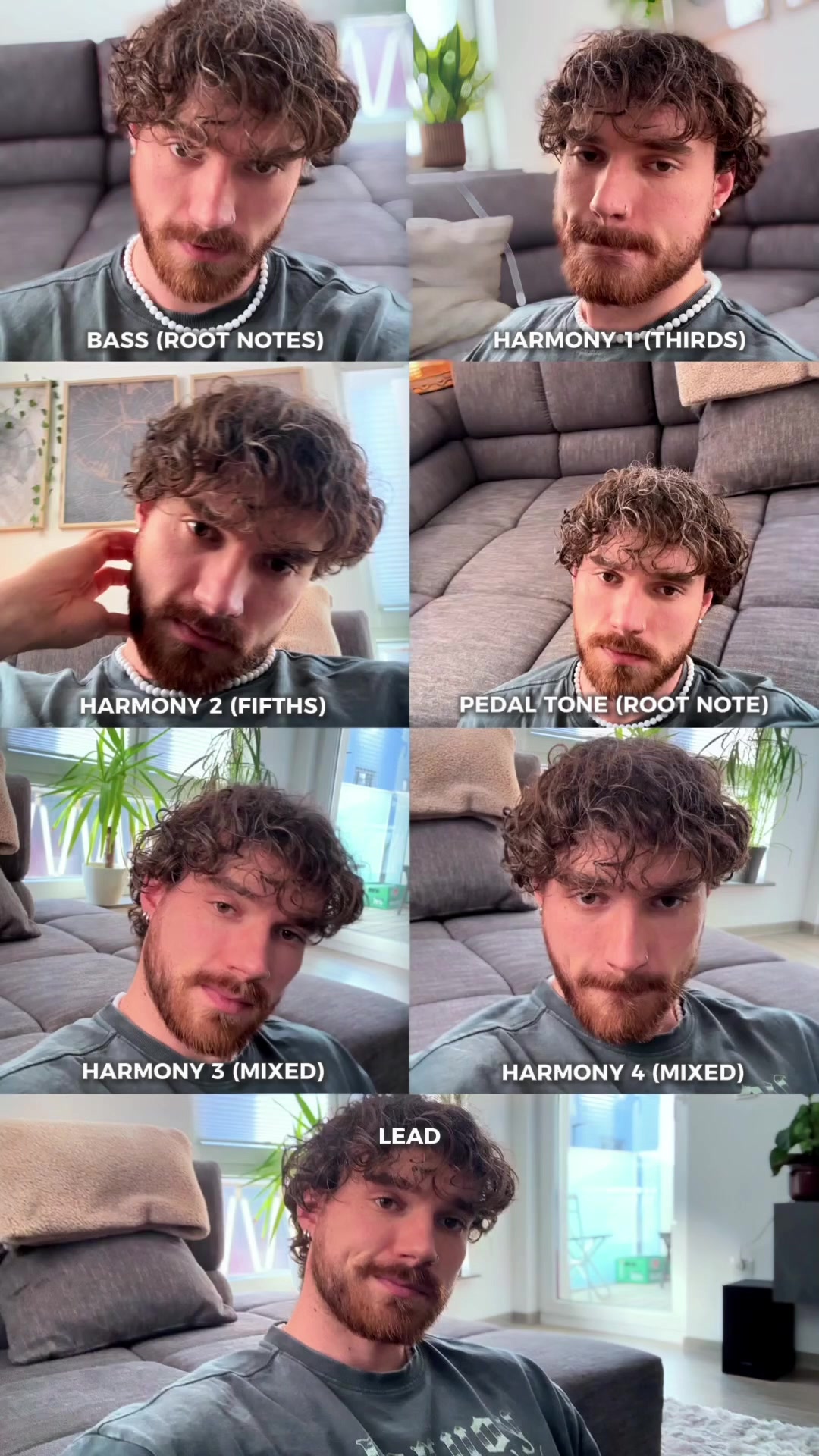
Separate roles
One box leads the line while the second box answers, supports, or lifts the hook.
Readable contrast
Small timing, register, and tone differences keep the duet from sounding copy-pasted.
Hook-first payoff
The second singer should arrive when the phrase needs energy, not just because the screen can hold another box.
One export path
The same stack can feed a cover reel, a short clip, or a tighter self-collab performance post.
Intent boundary
A self-duet query is broader than a vocal doubles fix.
People searching for a duet-with-yourself workflow usually want performance contrast, not just thickness. The extra voice has to feel like a second character, a second angle, or a second harmonic job. That makes this different from a pure vocal doubles workflow and more role-based than a generic social singing clip.
If you mainly need a wider chorus texture, use choir effect vocals. If the challenge is arranging a recognizable cover hook first, go to cover song harmonies.
What makes a self-duet convincing.
Each part has a different job
One singer carries the phrase while the other adds support, tension, or a melodic response.
The voices do not enter together by default
Staggered entries usually feel more musical than showing both voices from the first word.
The visual split matches the audio split
If both boxes sing the same line in the same way, the video looks busier than the idea deserves.
Workflow
Build the self-duet around a visible conversation.
Map the second singer before you start stacking extra parts.
The cleanest self-duets usually decide who owns the lyric, who answers it, and who lifts the hook before adding more layers.
Step 1
Choose the anchor voice.
Let one take carry the line people need to follow. That anchor can stay dry longer and keeps the duet readable.
Step 2
Give the second voice a real entrance.
Bring the partner voice in at the answer, lift, or punchline. The entry should feel earned, not automatic.
Step 3
Decide whether the third move is harmony or screen layout.
After two roles are clear, either widen the stack or move into a cleaner visual split. Do not try to solve both problems at once.
Self-duet formats
Three self-duet shapes that fit Harmonade well.
These are narrow enough to stay useful and distinct. Each one gives the second voice a different reason to exist.
Verse stays mostly solo, then the duet partner appears when the hook needs extra lift.
One voice leads while the other sits behind it with a narrow harmony that grows into a fuller stack later.
Related pages
Use the narrower guide when the bottleneck changes.
Ready